Water Damage Restoration Granada Hills, CA
24/7 water damage restoration in Granada Hills, CA. The restoration team extracts standing water, dries slab homes to the IICRC S500 standard and documents every step for your insurance claim.
(888) 578-6508Tap for Granada Hills emergency water removal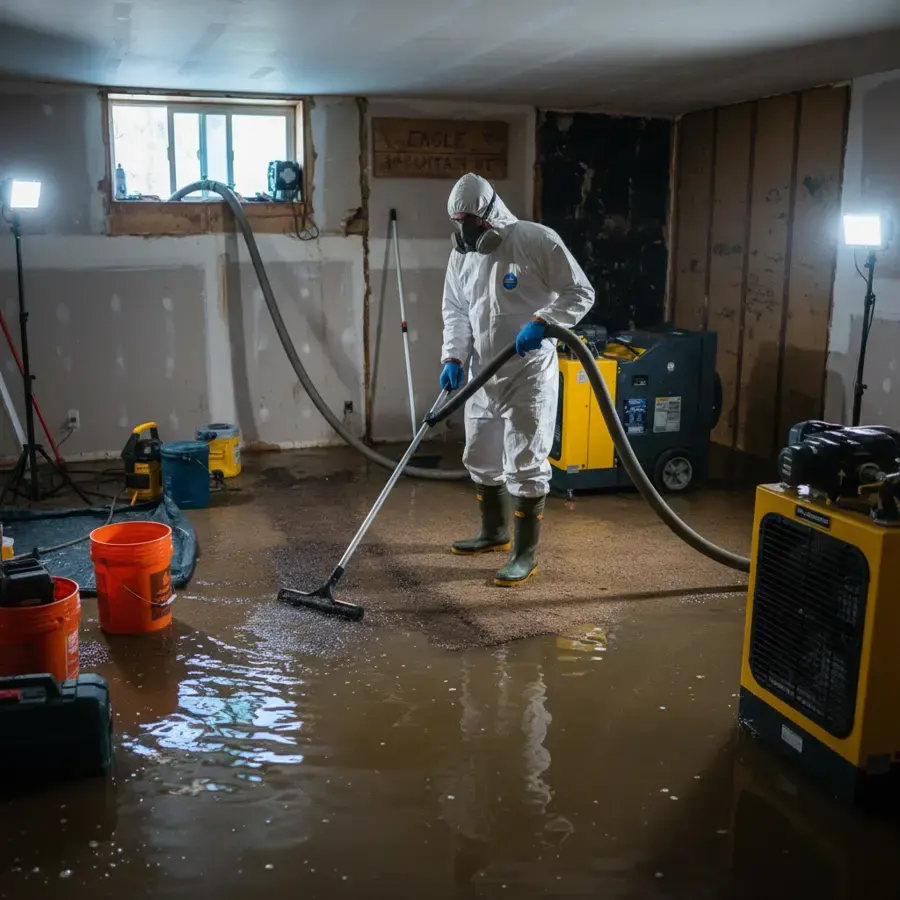
Water Damage Restoration Services in Granada Hills, CA
Water and sewage only, from the first extraction pass to the last moisture reading, for every Granada Hills street and the north Valley around it.
 Water Extraction and RemovalTruck-mounted and portable extraction pulls standing water before it soaks pad, drywall and framing.See how it is handled
 Slab Leak Water DamagePinhole leaks under post-war slabs and Eichler radiant floors, flooring lifted and the slab dried.See how it is handled
 Burst Pipe Water DamageGalvanized and copper supply failures inside walls and ceilings, extracted and dried in the cavity.See how it is handled
 Sewage Backup CleanupRoot-blocked laterals and toilet or tub backups treated as Category 3 from the very start.See how it is handled
 Storm Runoff and Flood CleanupFoothill runoff and street water that pushes inside, mud and silt removed and the structure dried.See how it is handled
 Roof Leak Water DamageFirst-storm leaks at flat roofs, flashing and vents, wet attic insulation pulled and ceilings dried.See how it is handled
 Ceiling Leak Water DamageUpstairs bath and supply pipe leaks traced, sagging drywall opened safely and joist bays dried.See how it is handled
 Water Heater Leak CleanupGarage and closet tank failures pulled up before drywall, cabinets and stored boxes soak through.See how it is handled
 Appliance and Supply Hose LeaksWasher, dishwasher, ice maker and toilet supply leaks dried out of floors, cabinets and toe kicks.See how it is handled
 AC Condensate Overflow CleanupAttic air handler pans and clogged condensate drains that stain ceilings in the long Valley summer.See how it is handled
 Structural Drying and DehumidificationFraming, subfloor, slab and hardwood dried to within 2 to 4 points of a dry reference.See how it is handled
 Commercial Water DamageStorefronts, offices, clinics and apartment buildings dried in phases to keep doors open.See how it is handled
How a Granada Hills water loss is handled, start to finish
Rapid local response
The response team dispatches 24/7. A burst pipe at 2 a.m. or a slab leak found on a Sunday is treated as urgent, and extraction starts as soon as a crew reaches the property.
IICRC S500 drying standard
The drying team maps moisture first, then sets air movers and LGR dehumidifiers to each room's evaporation load. Equipment stays until the readings say dry.
Claim-ready documentation
The tech who does the walkthrough photographs everything before demolition and logs daily psychrometric readings, so the claim file matches what an adjuster checks.
Local water know-how
Local restoration pros know post-war slab plumbing, Eichler radiant floors, root-blocked sewer laterals and how winter runoff moves off the Santa Susana foothills.
The equipment behind a Granada Hills dry-out
- Truck-mounted extraction pulls standing water out of carpet and pad far faster than a shop vacuum.
- LGR dehumidifiers pull moisture out of the air so wet framing and drywall keep releasing it.
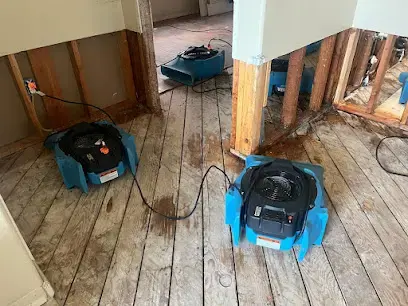
- Air movers are set to each room's evaporation load, angled along walls and under cabinets.
- Thermal imaging and pinless meters find water behind walls and under flooring before anything is opened.

Water damage restoration built around Valley homes
Granada Hills sits at the north edge of the San Fernando Valley, below the Santa Susana Mountains, and most of its homes are post-war ranch houses on concrete slabs. That shapes every loss: water runs under flooring, wicks into wall bottoms and hides inside the slab.
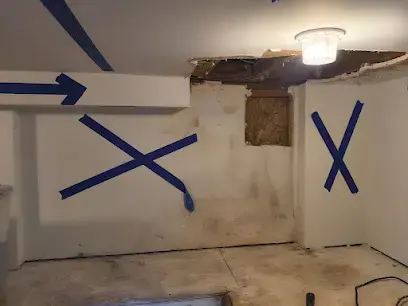
The restoration crew extracts first, maps moisture with meters and thermal imaging, then dries the structure to a verified reading. From Old Granada Hills to the foothill streets near O'Melveny Park, every step goes into the claim file.
More on how Granada Hills losses are handledWhat a water damage dry-out looks like in Granada Hills


What does water damage restoration cost in Granada Hills, CA?
Most Granada Hills water damage restoration runs about $1,200 to $6,500. The water category, the wet square footage, the materials involved and how fast drying started set where a loss lands, and sewage or storm water can push past $12,000.
Contained clean-water leak
- One room or less, caught early
- Extraction and air movers
- Daily readings until dry
Multi-room or slab leak
- Flooring lifted over the leak
- Wall cavities and slab dried
- LGR dehumidifiers and containment
Sewage or storm water
- Category 3 from the start
- Porous materials removed
- Antimicrobial, then full drying
Want a closer number? The Granada Hills water damage cost calculator works through the same drivers. Coverage depends on your policy, so check with your own insurer.
All water damage categories covered in Granada Hills, CA
Clean water
Supply pipes, slab leaks and water heater tanks release clean water. Caught early, carpet and drywall can often be dried in place.
Burst pipe water damageGray water
Washer hoses, dishwashers and AC condensate carry some contamination. Wet pad usually comes out and surfaces get an EPA-registered antimicrobial.
Appliance and supply hose leaksBlack water
Sewage backups and storm runoff from outside are Category 3 the moment they happen. Porous materials they touch are removed, not dried.
Sewage backup cleanupWater damage dried to the IICRC S500 standard
IICRC S500 is the industry drying standard. Category 1, 2 and 3 water are handled differently, and the class of the loss sets how much equipment each room needs.
Documentation for your insurance claim
The claim file holds a moisture map, daily psychrometric logs, timestamped photos taken before any demolition, the category and class of the loss and a line-item scope in an Xactimate-style format.
A sudden and accidental leak, like a burst supply pipe, is often treated differently from flooding or long-term seepage, and flood damage usually falls under a separate flood policy. Coverage depends on your policy, so check with your own insurer.
What to do while the water is still moving
- Shut off the water. Close the main valve where the supply enters the house, or the shutoff under the leaking fixture or tank.
- Make it safe. Switch off the breaker for wet rooms if the panel is reachable from a dry spot, and stay off wet floors near outlets.
- Document it. Photograph the water, the source and damaged belongings before anything is moved or thrown out.
- Call before it spreads. Water keeps wicking up drywall and under flooring, and mold can start growing within 24 to 48 hours.
Water damage restoration across Granada Hills and the north Valley
24/7 dispatch reaches every Granada Hills neighborhood, from the Chatsworth Street shops to the foothill streets below O'Melveny Park.
Granada Hills ZIP codes
91344 covers Granada Hills homes and businesses, and 91394 holds the Granada Hills post office boxes. Northridge, Porter Ranch, Mission Hills, North Hills, Sylmar and Chatsworth are covered too.
Every Granada Hills area and ZIP coveredOld Granada Hills and Chatsworth Street
The foothills and Granada Hills North
Eichler and golf course neighborhoods
Granada Hills South and the channel
North Valley neighbors
Nearby cities covered
One call puts Granada Hills water damage pros to work, day or night
Granada Hills water damage pros cover ZIP 91344 and 91394 and the north Valley around them. Extraction, drying and the claim file all start with one phone call.

Why Granada Hills homes take on water
Post-war slabs, hard water, hot summers and short, heavy winter storms shape almost every Granada Hills water loss.
- Post-war slabs: about six in ten homes went up between 1950 and 1969, mostly ranch houses on concrete slabs, and the Balboa Highlands Eichlers have heating pipe cast into theirs.
- Aging pipe: galvanized steel supply pipe lingers in pre-1970 homes, and clay or cast iron sewer laterals crack where mature tree roots reach them.
- Heat and hard water: summer highs in the 90s keep attic air handlers running for months, and Valley tap water averages about 8.6 grains per gallon of hardness.
- Winter runoff: most of the roughly 18 inches of yearly rain falls from January to March, and runoff off the Santa Susana foothills fills the Bull Creek channel.
- Quake history: the 1971 San Fernando earthquake forced 80,000 people below the Van Norman dam to evacuate, and in 1994 broken mains flooded Balboa Boulevard.
Granada Hills water damage questions, answered
Water in your Granada Hills home right now?
Skip the reading if water is still moving. Dispatch runs around the clock for extraction and drying.
(888) 578-6508 Call for Granada Hills water removalHow fast does someone respond to water damage in Granada Hills?
Dispatch runs 24/7, and active water is treated as urgent at any hour, weekends and holidays included. Travel time depends on traffic and the time of day, so shut off the water and call as soon as you find it.
What should I do first while water is still spreading?
Close the main water valve, switch off power to wet rooms if the panel is reachable from a dry spot, and photograph the damage before moving anything. Then call, because water keeps wicking into drywall and under flooring until extraction starts.
Does homeowners insurance cover water damage in Granada Hills?
Many policies treat a sudden and accidental leak, like a burst pipe or a failed water heater, differently from flooding, long-term seepage or a slow leak. Flood damage usually needs a separate flood policy. Coverage depends on your policy, so check with your own insurer.
How is water damage restoration priced in Granada Hills?
Price follows the water category, the wet square footage, the materials involved and how long the water sat before drying started. The water damage cost calculator shows a typical range for those drivers.
How long does it take to dry a house after a leak?
A contained Class 1 loss usually dries in three to five days. Hardwood, plaster and concrete slabs take longer, and equipment comes out on readings, not on a schedule. The drying time estimator shows a typical window.
What is the IICRC S500 standard?
IICRC S500 is the industry standard for professional water damage restoration. It covers how water categories and classes are judged, how equipment is placed and when a structure counts as dry.
Why are slab leaks so common in Granada Hills?
About six in ten homes here went up between 1950 and 1969, most of them on concrete slabs with copper supply pipe below or inside the floor. Decades of use, hard water and ground movement wear that pipe until a pinhole opens. More on slab leak water damage.
What is the difference between mitigation and repair?
Mitigation stops the damage: extraction, removal of what cannot be saved and structural drying. Repair puts the home back together afterward, with new drywall, flooring and paint. Insurers usually look at the two separately.
When does wet drywall have to come out?
Drywall touched by sewage or storm water comes out. Drywall soaked by clean water can often be dried in place if drying starts early and it has not swollen or crumbled; meters decide, not appearance.
Why is sewage handled differently from a clean leak?
Sewage is Category 3 water from the moment it backs up. The cleanup crew works in PPE, removes porous materials it touched and treats surfaces with an EPA-registered antimicrobial before drying. See sewage backup cleanup.
Water in your Granada Hills home? Call now.
Standing water keeps spreading into flooring, drywall and framing. One call starts extraction and drying anywhere in Granada Hills, day or night.
(888) 578-6508Start the Granada Hills dry-out now